WASHINGTON, DC — Devastating floods and landslides along the Nepal-Tibet border have killed at least 579 people and left 1,924 missing, according to Nepal’s disaster agency and police. In Tibet, Chinese state media says five people have died and 558 are missing.
The disaster hit on Wednesday when floodwater ripped through the border region, destroying homes, roads and river crossings. Rescue workers are trying to reach survivors before conditions worsen, but rain and unstable weather are making the response harder. Officials also warn that more flooding could follow if debris blocks river channels or if a newly formed lake breaks its banks.
What triggered the flooding
Early accounts pointed to an earthquake, but the U.S. Geological Survey later said the event was caused by a glacial collapse. The agency said part of a glacier broke apart and slammed into the valley below with enough force to register as a magnitude 5.2 event.
The USGS said the resulting surge sent water and debris about 62 miles, or 100 kilometers, downstream through the Trishuli and Bhote Koshi river systems. The flood wave swept through towns that draw mountaineers and pilgrims, and video from the area showed mud, rock and water tearing away buildings, vehicles and roadways.
One clip showed the flood engulfing the Rasuwagadhi Border checkpoint on the Nepal side. Across the border, Gyirong Port was also hit, and deaths were reported in Tibetan villages. Scientists are still working out the exact sequence of events, including whether a landslide first dammed the river before the water burst through.
Why officials are worried about another flood
Experts say the danger is not over. The International Centre for Integrated Mountain Development has warned that debris in the river system could trigger secondary flooding in the coming days. It is checking whether the Trishuli River has been temporarily blocked in narrow stretches, which could allow a landslide dam to form and fail later.
China has also warned that a lake formed after the collapse may overflow, creating another flood threat downstream. State broadcaster CCTV said about 2.5 million cubic meters of water had collected there by Friday. Rescue operations were briefly paused after the lake overflowed, although water levels later eased slightly.
Heavy rain is forecast over the next few days. Some experts say the lake may also drain naturally over time, but the combination of unstable slopes, debris-filled rivers and more rain keeps the risk high for communities below the disaster zone.
Missing tourists and the international response
The number of missing travelers includes people from several countries, and the U.S. State Department says 90 Americans are still unaccounted for. Other reported missing groups include at least 320 Indian nationals, nearly 100 Chinese nationals, 62 Ukrainians, 51 Malaysians, 39 Australians, 33 British nationals and 30 Canadians and permanent residents.
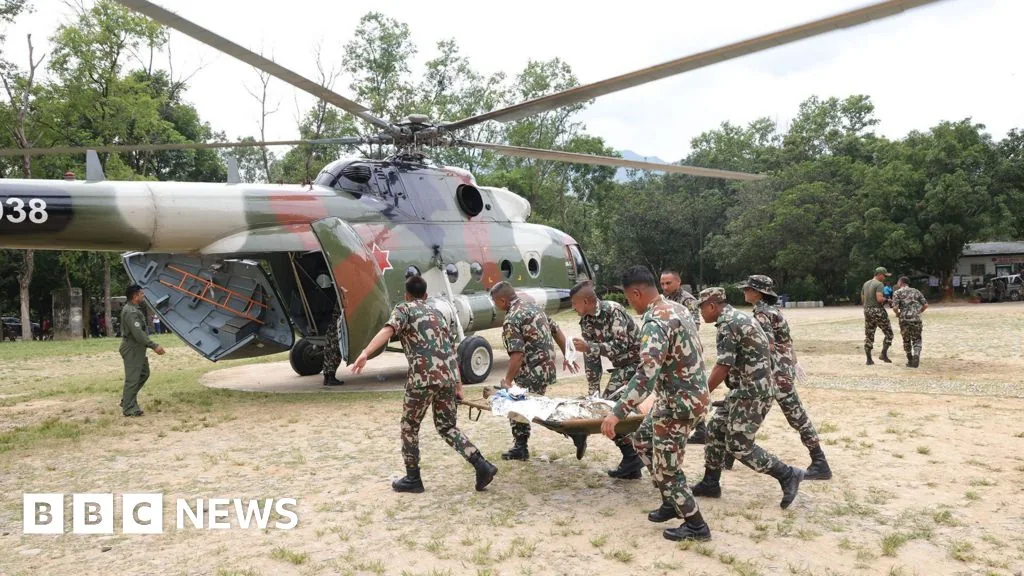
Nepal has also said 44 army members and 28 police officers are missing. Officials have released a list of more than 517 foreign nationals who have not been reached since the floods began, though it is not clear whether any names overlap with other government tallies. On the ground, Nepal says a 1,200-member team has been deployed along the riverbanks from Rasuwa to Chitwan.
International aid is also moving in. The United States has pledged $500,000 for affected communities, the United Kingdom has offered £5 million and India says its air force has sent military cargo planes carrying nearly 50 tonnes of supplies.
When the weather turns dangerous, SVH Snow is watching.