ST. LOUIS, MO — A cold front is set to sweep across Missouri overnight, delivering a dramatic shift away from the oppressive heat and humidity that has gripped the region, with St. Louis forecast to see temperatures fall from near 97 degrees today into the 70s and 80s by tomorrow morning. Forecasters say the front will also bring a significant drop in humidity, offering residents their first real taste of more comfortable air in what has been an unusually hot and sticky stretch of early September.
A Sharp Divide Forms Across the State
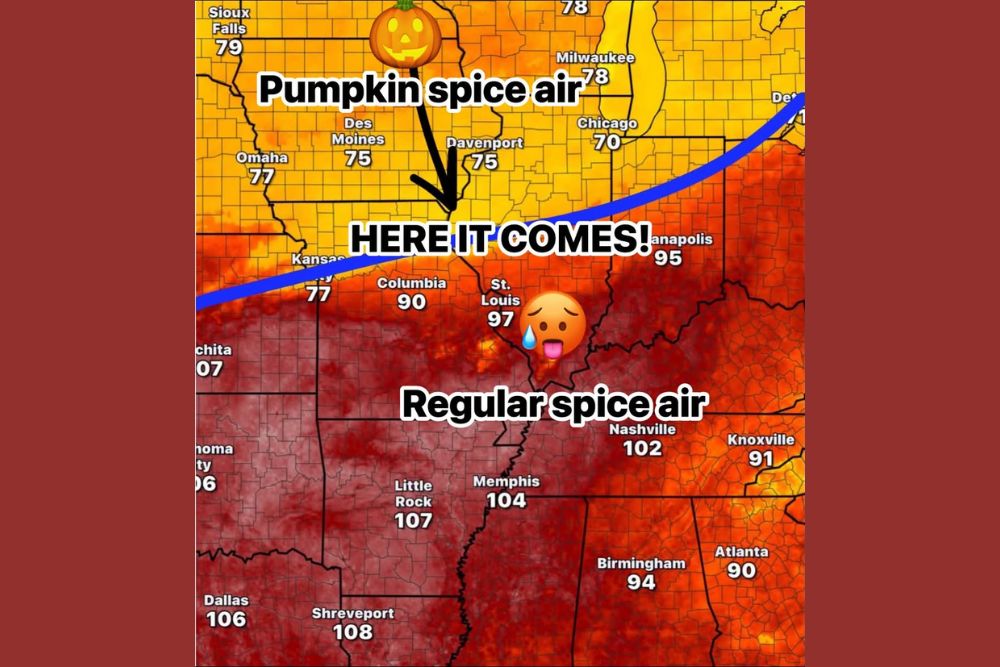
Current temperature data illustrates a striking contrast forming across Missouri as the front approaches, with St. Louis sitting at 97 degrees while communities just to the north, including Columbia at 90 degrees, are already beginning to feel slightly less oppressive conditions. That temperature gradient is expected to shift dramatically once the front pushes through, transforming the entire state’s weather pattern within a matter of hours.
The front’s northern origin is evident in current readings from communities like Sioux Falls, Des Moines, and Davenport, all sitting comfortably in the mid-to-upper 70s, offering a preview of the air mass now advancing toward Missouri and the rest of the region.
Overnight Passage Sets Up a Cooler Tomorrow
The front is expected to move through Missouri during the overnight hours, setting the stage for a dramatically different feel by tomorrow morning. Forecasters describe the incoming air mass as much lower humidity with temperatures in the 70s and 80s, a stark improvement over the hot, humid conditions residents have endured in recent days.
That overnight timing means residents across the St. Louis metro area and surrounding communities should notice the change almost immediately upon waking, with the oppressive stickiness that has characterized recent days giving way to a noticeably drier and more comfortable atmosphere.
Extreme Heat Persists Just South of the Boundary
While Missouri prepares for relief, areas south of the front’s path remain locked in extreme heat, with Little Rock reporting 107 degrees, Shreveport at 108 degrees, and Memphis reaching 104 degrees. Communities across the Mid-South and Deep South, including Nashville at 102 degrees and Birmingham at 94 degrees, continue to swelter under what has been described as regular, unrelenting late-summer heat.
This sharp contrast between the cooler air arriving in Missouri and the continued extreme heat farther south illustrates just how significant of a boundary this front represents, separating a preview of fall-like conditions from the oppressive heat that remains entrenched across much of the South.
A Sign That Fall May Be Approaching
Forecasters expressed cautious optimism that this front could represent an early sign that the region’s oppressive summer heat pattern may finally be nearing its end, suggesting fall could be just around the corner for Missouri and neighboring states. There is even hope that the broader stretch of intense heat gripping much of the central and southern United States could ease by the middle of the month.
While one cold front does not guarantee a permanent pattern change, the scale of the cooling and drying expected with this system offers residents across Missouri a genuine and welcome preview of more autumn-like conditions after an extended stretch of summer-like heat.
What Residents Should Expect
Residents across Missouri, particularly in the St. Louis area, should prepare for a significant improvement in comfort levels by tomorrow morning, with both temperatures and humidity dropping noticeably behind the front. Those in areas farther south, including Arkansas, Tennessee, and the broader Mid-South, will need to continue enduring extreme heat for now, as the cooler air is not expected to reach those areas with this particular system.
Forecasters will continue monitoring how long the cooler, drier air remains in place across Missouri, as well as whether additional fronts may follow to help extend relief further south and east in the coming weeks.
For continuing coverage of severe weather events and critical storm analysis across the United States, visit svhsnow.com.