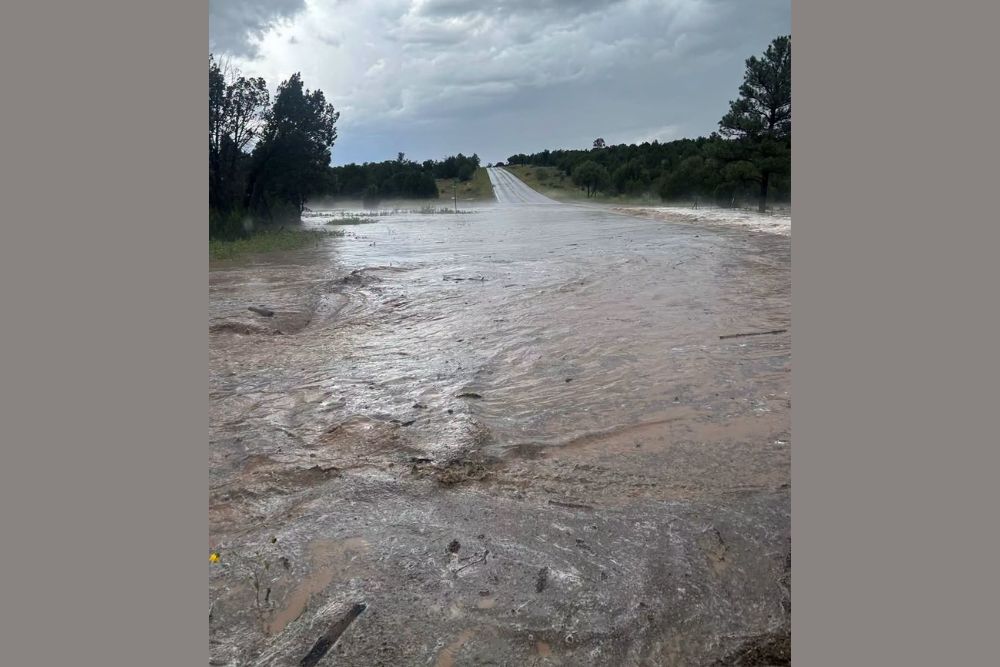
LINDEN, AZ — Flash flooding has closed Lone Pine Dam Road at Linden Wash in Navajo County, Arizona, according to the Navajo County Sheriff’s Office, with images showing a torrent of muddy, fast-moving water completely overtaking the roadway. Officials are urging residents and travelers throughout the area to never drive into high water, a warning that comes as the region continues to experience the kind of intense monsoonal rainfall capable of producing rapid and dangerous flash flooding.
Roadway Overwhelmed by Fast-Moving Floodwater
Photos from the scene show Lone Pine Dam Road completely submerged beneath a wide, churning flow of muddy water at its crossing with Linden Wash, with visible turbulence and debris carried along by the current. The volume and force of the water crossing the roadway illustrate why officials moved quickly to close the route rather than allow traffic to attempt passage through the flooded section.
The surrounding landscape, featuring scattered pine trees and open grassland typical of the Mogollon Rim region in eastern Arizona, shows storm clouds still visible overhead, suggesting the flooding developed in direct response to recent or ongoing heavy rainfall in the immediate area.
Navajo County Sheriff Confirms the Closure
The Navajo County Sheriff’s Office confirmed the closure of Lone Pine Dam Road at the Linden Wash crossing, directly citing the flooding as the reason for shutting down the route to traffic. Law enforcement involvement in confirming and communicating this closure underscores the seriousness with which officials are treating the flood conditions currently affecting this section of the county.
Road closures of this nature are a standard and critical safety measure during flash flood events, particularly in areas like eastern Arizona, where washes and low-water crossings can transform from dry or gently flowing channels into dangerous torrents within a matter of minutes during intense rainfall.
Never Drive Into High Water
Officials reiterated one of the most fundamental flash flood safety messages: never drive into high water. This warning reflects the well-documented danger posed by floodwaters on roadways, where even seemingly shallow water can conceal washed-out pavement, and where the force of moving water can sweep vehicles off the road far more easily than most drivers anticipate.
This message carries particular weight in areas like Navajo County, where numerous washes and low-water crossings intersect local roadways, creating multiple points where flash flooding can suddenly render a previously passable route impassable and hazardous during periods of heavy rain.
Flash Flooding Remains a Recurring Monsoon Season Hazard
Flash flooding events like this one are a recurring feature of Arizona’s monsoon season, when intense, often localized thunderstorms can produce rainfall rates heavy enough to overwhelm the state’s numerous washes and normally dry drainage channels in a short period of time. The terrain across much of eastern Arizona, including the area surrounding Linden and the broader Navajo County region, is particularly susceptible to this kind of rapid flooding given its natural drainage patterns.
This particular flooding event at Linden Wash serves as a visible reminder of how quickly conditions can change on rural roadways during active monsoon weather, even in areas that may appear calm or only lightly affected by rain just a short time earlier.
What Residents and Travelers Should Do
Residents and anyone traveling through Navajo County, particularly along Lone Pine Dam Road and other routes that cross washes in the area, should heed the closure and avoid attempting to cross any flooded section of roadway. Officials continue to emphasize that turning around and finding an alternate route is always the safer choice when encountering water across a roadway, regardless of how familiar a driver may be with the route under normal conditions.
Given the unpredictable nature of monsoon-driven flash flooding, residents in the broader area are encouraged to remain aware of changing weather conditions and to check for road closure updates before traveling through areas known to be susceptible to flooding during heavy rain events.
For continuing coverage of severe weather events and critical storm analysis across the United States, visit svhsnow.com.