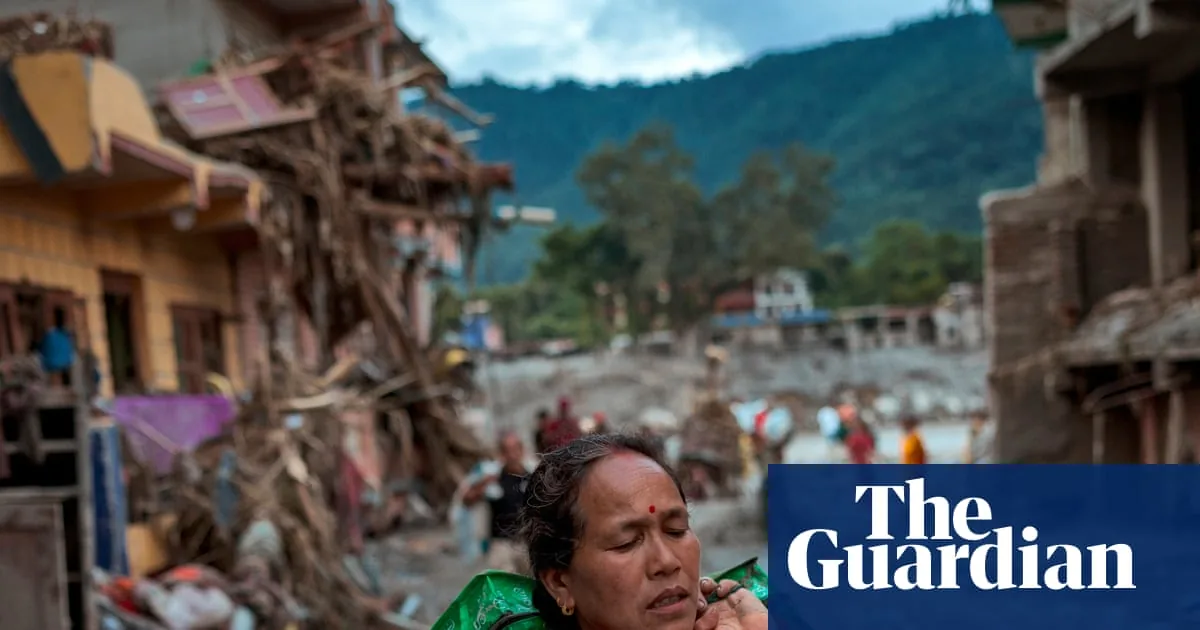
WASHINGTON, DC — Rescue crews in Nepal and Tibet are racing against more rising water after catastrophic flash flooding and mudflows left at least 750 people dead and more than 3,000 missing. Chinese officials said 16 people had died and 546 were unaccounted for in Tibet, while Nepali authorities reported 734 deaths and 2,498 missing.
The flood emergency has also touched U.S. families. Chinese state broadcaster figures included 18 Americans among the missing foreign nationals in Tibet, alongside citizens from Nepal, India, Latvia and Britain. More than 3,700 people have been rescued in Nepal so far, but officials are warning that the situation remains unstable as river levels continue to rise.
Tunnel Rescue Turns to a Race Against Time
One of the most urgent search operations is centered on the Trishuli 3A hydroelectric site in Nepal, where workers are believed trapped in a tunnel. Late Saturday, the Nepali army succeeded in inserting a pipe into the tunnel, a breakthrough officials said would allow air to reach people inside.
Nepali home minister Sudan Gurung said crews were preparing to excavate the tunnel and send a rescue team in. Authorities believe more than 100 workers may still be alive and trapped inside tunnels at the Trishuli 3A and Trishuli 3B sites, which have become the focus of the search effort. The disaster authority also said 933 hydropower workers were among the missing, underscoring how heavily the damage hit energy projects in the region.
Warnings Grow as Newly Formed Lakes Threaten More Flooding
Nepal’s disaster authority warned Sunday that the Bhotekoshi River in Rasuwa had risen further, telling rescue teams to proceed carefully. The deluge of ice and mud created large lakes, and one newly formed body of water has raised fresh fears that more flooding could follow.
In Tibet, Chinese authorities temporarily paused rescue work in the hardest-hit area of Gyirong because of the risk from that new lake. Xinhua said 2,141 rescuers were near the site, including more than 500 in the worst-hit area. The Chinese and Nepali foreign ministers also spoke Saturday about sharing satellite and hydrological data as both sides try to track the evolving danger.
Families Search Hospitals as Entire River Settlements Were Swept Away
In Kathmandu, relatives gathered outside the main government hospital from early morning, scanning noticeboards and injured-patient lists in search of missing family members. Some held photographs, while others moved between the help desk and the hospital entrance hoping for news that never came.
Outside the hospital, Buddhi Ram Dangol said settlements along the river had been wiped out and that there was nothing left. Another woman, Dil Maya Lama, traveled about 130 kilometers from Ramechhap to look for her 26-year-old brother, a driver for a hydropower company in Rasuwa. Officials say the scale of destruction could leave reconstruction costs in the billions of dollars, even before the full toll is known.
When the weather turns dangerous, SVH Snow is watching.