WACO, TX — Numerous wildfires are popping up and spreading quickly across a wide stretch of Central Texas west of Interstate 35, with new fire activity emerging rapidly amid an elevated fire risk that forecasters warn will persist through the rest of the week. Officials and residents alike are hoping for meaningful rainfall soon, given how dry and fire-prone conditions have become across the region.
Multiple Fire Clusters Stretch Across a Wide Corridor
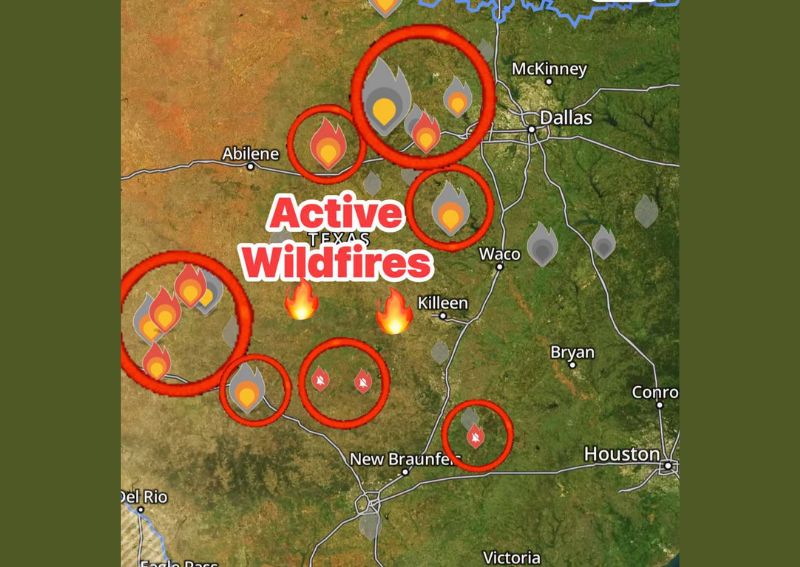
Fire tracking data shows numerous active wildfires concentrated in several distinct clusters stretching from north of Abilene down through the area west of Killeen and continuing toward New Braunfels, covering a substantial swath of Central Texas. This widespread distribution of fire activity, rather than a single large fire, illustrates just how conducive current conditions have become for new ignitions across a broad geographic area.
One particularly notable cluster appears concentrated in an area northwest of Abilene, showing multiple active fire icons clustered tightly together, suggesting either several distinct fires burning in close proximity or a single complex event with multiple identifiable hot spots being tracked separately.
New Fires Continue to Emerge Rapidly
Forecasters specifically noted that new wildfires are popping up and quickly spreading, language that reflects the dynamic, rapidly evolving nature of the current fire situation across the region. Rather than a static set of fires being monitored, this description suggests fire activity is actively expanding in real time as conditions remain favorable for new ignitions and rapid fire growth.
This pattern of continuously emerging new fires, rather than a single event that firefighters can fully contain and move past, creates an especially challenging situation for fire crews and emergency management officials working to respond across such a wide geographic area simultaneously.
Elevated Fire Risk Persists Through the Week
Perhaps most concerning for residents across the affected region is the forecast that this elevated fire risk will continue for the remainder of the week, meaning the current wave of new fire activity is unlikely to be an isolated, short-lived event. This extended timeline suggests conditions favorable for fire ignition and rapid spread, likely including low humidity, dry vegetation, and gusty winds, will remain in place for several more days.
That sustained elevated risk raises the possibility that additional new fires could continue to emerge even as crews work to address those currently burning, compounding the challenge facing firefighting resources across the region throughout the coming days.
The Region Desperately Needs Rain
Underscoring the severity of the underlying conditions driving this fire activity, forecasters and residents expressed a clear and urgent desire for rainfall, describing the need for rain as significant. This sentiment reflects the broader drought conditions likely contributing to the dry vegetation and low humidity levels that have made the region so susceptible to rapid fire ignition and spread this week.
Without meaningful rainfall to help ease the current dry conditions, the elevated fire risk is likely to persist beyond just this week, potentially extending the challenging fire environment across Central Texas until a genuine pattern change brings much-needed moisture to the region.
A Wide Geographic Spread of Fire Activity
The fire activity shown stretching from near Abilene in the west through areas surrounding Killeen and down toward New Braunfels in the south illustrates just how broadly this fire-prone pattern has affected Central Texas. This wide distribution means numerous communities across a large stretch of the state are simultaneously dealing with active fire threats rather than the situation being confined to a single county or region.
Communities positioned along this corridor, particularly those west of the I-35 corridor connecting major cities like Dallas, Waco, and San Antonio, should remain particularly vigilant given their proximity to the numerous active fire clusters currently being tracked across the region.
What Residents Should Do
Given the numerous active wildfires and the elevated fire risk expected to continue through the week, residents across Central Texas, particularly those west of I-35, should exercise extreme caution with anything that could spark a new fire, including outdoor equipment use, debris burning, or any other activity involving open flame or sparks. Residents in areas near active fire clusters should stay informed about local conditions and be prepared to respond quickly if fire activity approaches their location.
For continuing coverage of severe weather events and critical storm analysis across the United States, visit svhsnow.com.