GRAND CANYON, AZ — A flash flood tore through Arizona’s Grand Canyon National Park on Saturday afternoon, leaving at least one person dead and 15 others presumed missing, according to park authorities. The storm also forced the evacuation of more than 60 people from the area.
The National Park Service said the body of a 46-year-old man was recovered Sunday evening near Crystal Rapids along the Colorado River. Officials said the flood was triggered by rainfall on the Kaibab Plateau and hit around 2:30 p.m. in Bright Angel Canyon and the Phantom Ranch area.
Rescue crews used helicopters to pull people out as floodwater, mud, boulders, and landslides swept through the canyon. Park officials said more thunderstorms and heavy rain were expected into Monday.
How the flood unfolded
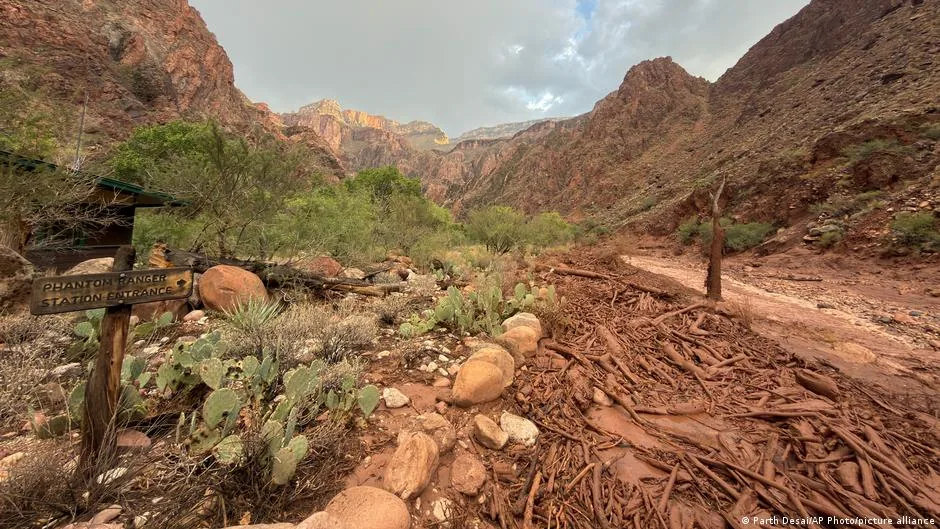
Hikers described a fast-moving wall of water and debris that gave little warning. Parth Desai, who was walking in Bright Angel Canyon with a group, told the Associated Press that the creek began to flood and waterfalls appeared almost instantly.
He said the group saw boulders, mud, and landslides moving through the area before spotting a debris wall about 4 feet high heading toward them. They ran into a patch of cacti and were later rescued by helicopter.
The National Weather Service said as much as 1 inch of rain fell in about 20 minutes, with much of it rushing down steep terrain into the canyon. That sudden runoff turned a hard rain into a dangerous flood event in a short period of time.
Damage, closures and safety steps
The flood destroyed nearly all of the footbridges over Bright Angel Creek and pushed boulders and debris into the Colorado River. It also damaged the park’s only water pipeline, which led officials to impose water restrictions.
Grand Canyon National Park remained open for day use on Sunday, but several areas were closed. Those closures included Bright Angel Campground, Phantom Ranch and parts of the North Kaibab Trail.
Officials also said overnight stays at lodges and hotels inside the park would be suspended starting Monday. Colorado River rafting trips were halted as crews assessed the damage and continued monitoring the weather.
What visitors should expect next
The immediate concern is the possibility of more storms and additional flooding, especially with wet conditions already affecting the canyon. Park staff have not said when the closed areas will reopen, and that timing will likely depend on weather, trail conditions, and repairs.
For now, the focus is on search efforts, damage assessment, and keeping visitors out of the most affected areas. Anyone heading to the park should expect changing conditions, water-related restrictions, and disruptions to backcountry and river travel.
Grand Canyon officials are urging caution as crews work through the aftermath of one of the park’s most dangerous flooding events in recent memory.
When the weather turns dangerous, SVH Snow is watching.