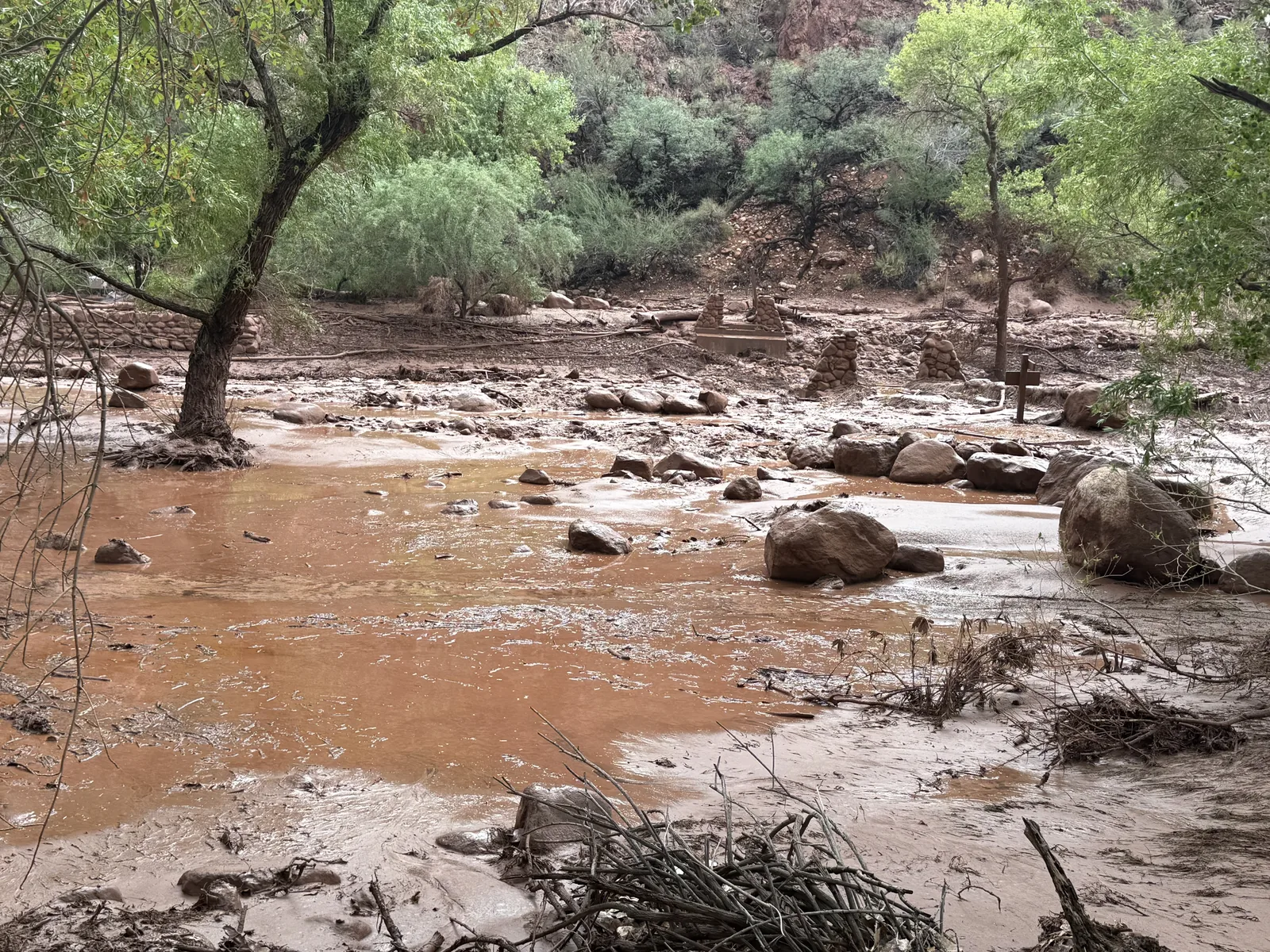
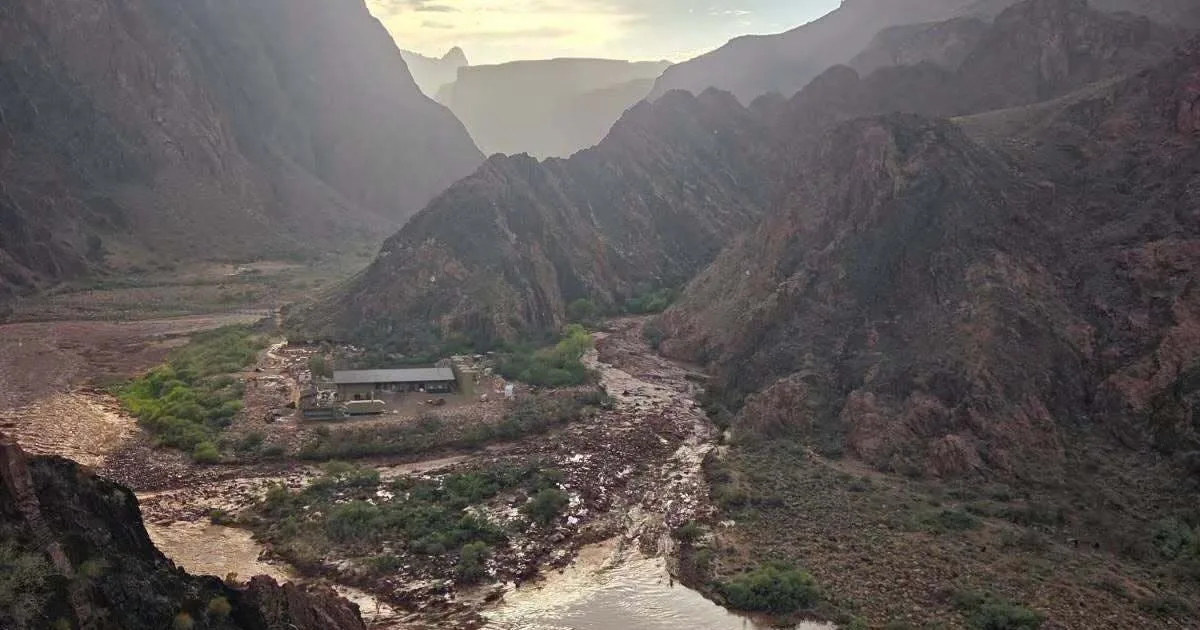
GRAND CANYON, AZ — The search is continuing in the Grand Canyon after a violent flash flood over the weekend left two hikers dead and a third man missing. Rescue crews are still looking for 53-year-old Tim Smith while officials begin checking damage across parts of the inner canyon.
Smith was hiking with 46-year-old John Giusti and 42-year-old Brent Rosenkranz, who both died in the flooding. The deadly weather has also sparked fresh concern about whether visitors were being routed through terrain that was fully ready after last year’s Dragon Bravo Fire.
People who know the canyon say monsoon conditions are always dangerous, but they are now questioning whether the North Kaibab Trail and nearby stretches should have been open when severe rain hit.
Why hikers are worried about the canyon
Brian Speciale, host of the Grand Canyon Hiker Dude Show, says the canyon has long been risky during heavy rain, especially in narrow sections where escape routes are limited. He points to the Rim-to-Rim route as one of the most demanding hikes in the park because it combines exposed ground with long canyon passages.
One of the most dangerous stretches, he said, is an area known as The Box between Cottonwood Campground and Phantom Ranch Campground. That section runs for roughly four to four and a half miles and leaves hikers hemmed in by steep walls with the creek close by for much of the route.
Speciale said that if a storm drops heavy rain there, hikers can have very few options except trying to reach higher ground fast. Park officials have not said exactly where the flood deaths occurred.
Burn scar runoff may have worsened the flood
Arizona State Climatologist Erinanne Saffell said the burn scar from the Dragon Bravo Fire likely played a major role in the flooding. After a wildfire, soil can lose its ability to absorb rainfall, which means water runs off more quickly instead of soaking in.
That kind of runoff can turn a storm into a much more dangerous event in steep canyon terrain. In places like the North Kaibab Trail, fast-moving water can leave little time to react and can damage the trail itself, along with surrounding infrastructure.
Officials are still in the early stages of assessing what was hit and how much repair work may be needed. The damage checks are also expected to factor into any decision about when portions of the inner canyon can reopen safely.
What happens next for the trail and search
Speciale said he believes the trail may have reopened before the terrain had been tested enough by a major monsoon or significant snowmelt. He said he thinks that may have created conditions where risks were underestimated.
He also said only a small portion of the North Kaibab Trail, about three of its 14 miles, may be relatively safe from flash flooding, with the rest more exposed to runoff and dangerous water movement. That is his assessment, not a park service determination.
The National Park Service and the Department of the Interior have been asked for comment on the reopening of the trail and have not responded yet. For now, officials say the damage review is still beginning and the search for Smith continues.
When the weather turns dangerous, SVH Snow is watching.