KATHMANDU, NP — A sudden flood wave linked to a glacial collapse has left a vast stretch of the Nepal-Tibet border reeling, with officials on both sides reporting deaths, missing people and severe damage to roads, buildings and travel routes. China’s Xinhua News Agency said mudslides in Tibet killed at least three people and left 558 missing, while Nepal police said at least 162 people were killed after flash floods swept through border communities a day earlier.
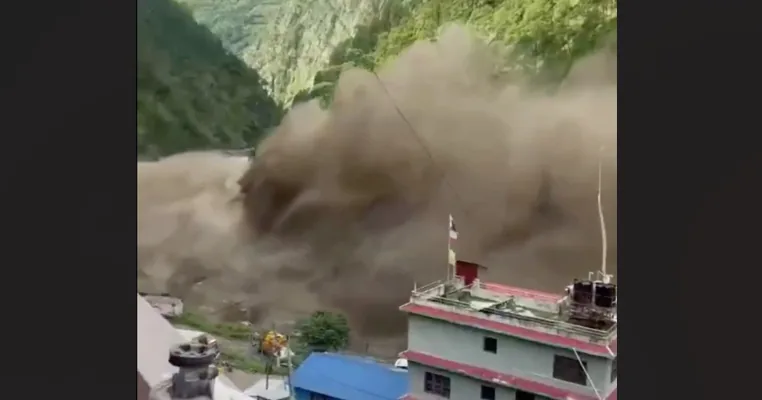
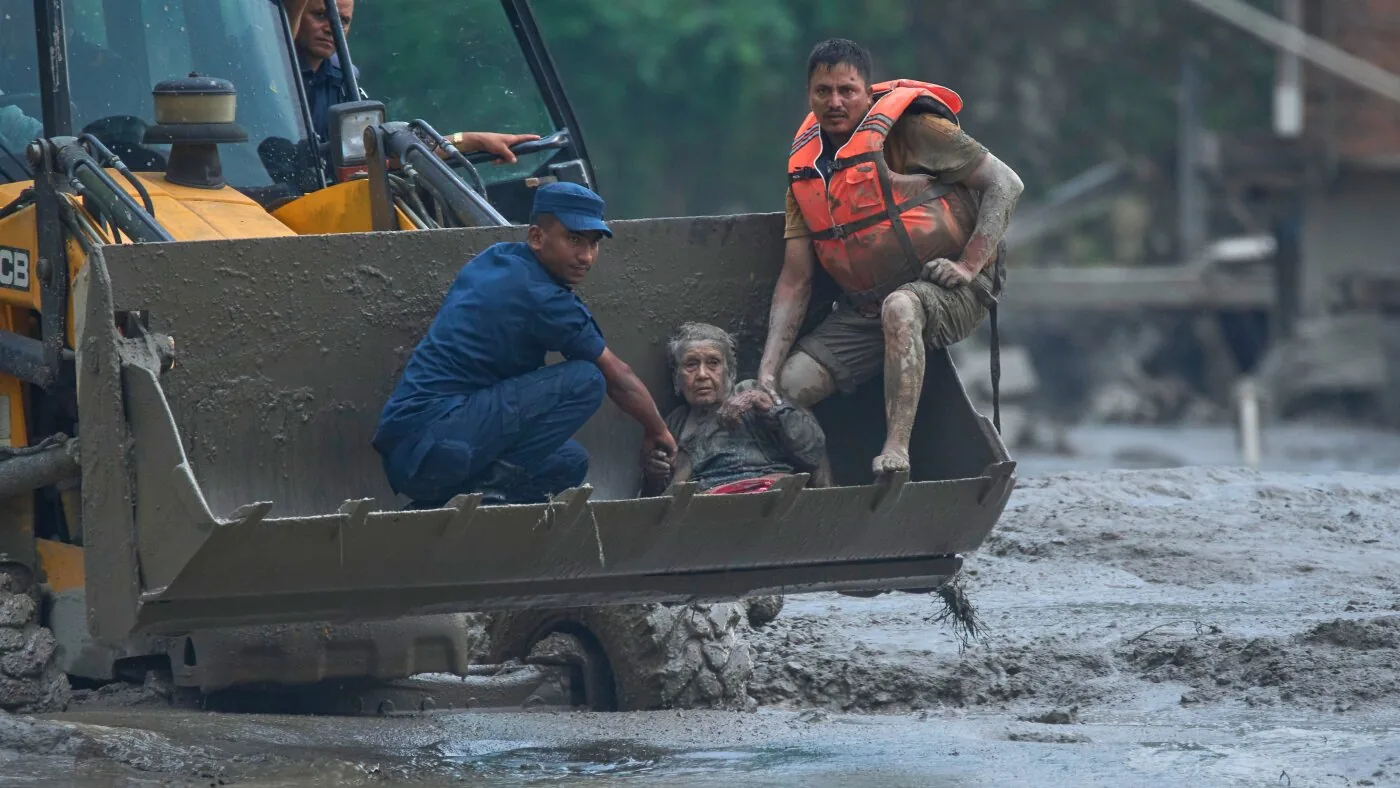
The disaster hit fast enough that many people had little or no chance to escape. Drone footage from Nepal showed roads ripped apart and structures buried under thick gray water, while debris was left hanging from wires and tree branches. Travel has been halted in some areas, and rescue efforts are complicated by the region’s steep terrain and damaged infrastructure.
Officials race to account for the missing
Chinese state broadcaster CCTV said 260 of the 558 people missing in Tibet were foreigners, and that two villagers had been rescued. Nepalese officials initially said 403 people were missing, including 341 foreigners, before later figures narrowed the list of those unaccounted for. Sunil Sharma, a tourism board spokesperson, said the missing included 133 Indians, 47 Americans, 34 Australians, 33 Britons and 24 Canadians.
The State Department said it was aware of Americans affected. Australia’s foreign minister, Penny Wong, said at least 34 Australians on pilgrimages and hiking tours were missing, adding that they were believed to be in separate groups. Malaysia’s foreign ministry later said 55 Malaysians in Kathmandu were unreachable because infrastructure damage was making contact difficult. It said there was no official confirmation of Malaysian casualties.
In Nepal, the hardest-hit areas included Nuwakot district, where images showed upper floors of buildings coated in mud after the torrent surged through. One resident, Shoyam Rajbhandari, said the flood hit quickly as people were preparing for the workday and that the number of dead and missing was still unclear.
Why the flood was so destructive
The U.S. Geological Survey first described the event as a magnitude 4.4 earthquake near the Nepal-China border, but later revised its assessment. The agency said seismic data and satellite imagery showed a magnitude 5.2 glacial collapse, not an earthquake, and that the debris flow rushed downstream with catastrophic force.
Climate specialists at the Kathmandu-based International Centre for Integrated Mountain Development said an avalanche from a glacier likely triggered the flash flood. They said water levels on the Trishuli River rose by as much as 9 meters, or 27 feet, in about half an hour. The Lhende Khola River, a tributary of the Bhotekoshi, reached maximum flooding.
Saswata Sanyal, a disaster risk reduction specialist with the research group, said the Lhende Khola had flooded twice in 14 months and that this event was set off by an ice-rock avalanche from a glacier on the Nepal side that blocked the river and then released a sudden surge downstream.
A wider warning for the Himalayan region
This is the second major flash flood in the area in just 14 months. In August last year, a glacial lake in Tibet overflowed after high temperatures, killing nine people and damaging critical infrastructure, including a bridge linking Nepal and China. The repeated flooding has underscored how unstable the Himalayan ice system has become for communities, roads and water supplies.
Researchers in Kathmandu said earlier this year that glaciers across the Hindu Kush Himalaya are melting faster, with ice loss rates doubling since 2000. Experts say warming temperatures, heavier monsoon patterns and shrinking glaciers are combining to raise the risk of floods and landslides across the region, where steep valleys also serve as key transport and trade corridors.
The latest disaster has brought renewed attention to how quickly mountain communities can be isolated when rivers surge and roads fail. With many people still missing, officials and humanitarian groups are continuing rescue and coordination efforts across national borders.
When the weather turns dangerous, SVH Snow is watching.